
At its coronary heart, good images is about exhibiting people views of the world they might not in any other case see. That might be; places your viewers have not visited, unimaginable methods of seeing to the human eye corresponding to lengthy exposures and evening pictures, however most frequently this novelty comes in the type of a unique perspective. Even acquainted scenes and objects could make compelling photographic subjects if we are willing to explore them from new angles.
Aerial pictures is certainly one of my favourite methods to supply that novel perspective. I’m lucky to spend so much of time in small planes. My life in Alaska is full of flights in bush planes to remote places within the state. While only occasionally do I fly particularly to make aerial images, I discover merely going to and from completely different areas offers ample opportunity.
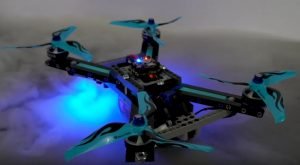
The second way I frequently use to entry an aerial perspective is by flying drones. While both strategies get me the elevation I want, the photographic expertise may be very, very totally different. The two strategies, planes and drones, require very different ways of thinking about image-making.
Here are a quantity of tips to improve your aerial photography photographs, whether you are capturing from a plane or utilizing a distant drone.
Airplanes
While massive passenger jets are great for getting us from one place to a different shortly, they are awful images platforms. Sure, I’ve made some images from jet home windows, however they inevitably comply with the identical formula. There’s an airplane wing within the foreground with some sunset or mountain beyond. It gets old. Plus the perpetually fogged or scratched home windows will destroy your image high quality. Except for the occasional cellphone snap, I not often bother with it anymore.
Small, single-engine planes, nonetheless, are a different story and could be an incredible platform for inventive aerial pictures.
Sharpness
Attaining a sharp image is a major problem as a result of airplanes are vibration-filled nightmares. Here are four things that will help you enhance sharpness:
1. Use a quick shutter speed. I like anything over 1/1000th of a second.
2. Don’t brace your lens or arms on the plane. Hold your camera and elbows freed from the window. If you touch the airplane, the vibrations might be transmitted straight into your digital camera. I tuck my arms against my sides and hold the lens an inch or so away from the window glass.
3. Focus at infinity. I typically shoot guide focus from the air and pre-set my focus level to infinity. Everything you may be seeing from the air will be in focus when the lens is ready to infinity, so don’t even trouble with autofocus.
four. Shoot extensive open. The depth of subject is not a problem from a 1000 or meters out of your topic. So a take advantage of the additional shutter pace supplied by your fastest f-stop.
Lens Choices
When flying 100+ mph at low altitude, the landscape passes very quickly. If you don’t act shortly, you’ll miss the shot. That’s why I like zoom lenses for aerial images. I can rapidly compose with different focal lengths, without having to alter lenses or cameras. I favor a wide to reasonable zoom. A mm or related lens is about proper.
Usually, in a small aircraft, you’ll be in direct communication with your pilot, who might be willing that will help you out together with your pictures. When I’m flying over something interesting, but a wing or strut is in the way in which, I’ll often merely ask the pilot to tip a wing a method or one other. Pilots are sometimes joyful to accommodate you.
You can also ask them to make slight turns, and even circle if there is something particularly compelling. If you’ve chartered a flight for photographic purposes, be at liberty to ask for what you want.
I suggest speaking to your pilot ahead of your trip to debate what type of photographs you want, and how she or he would possibly be able to help you. If it is a photography-specific flight, you could even have the ability to remove windows or doors from the aircraft.
Remember your pilot is the ultimate decide of what’s acceptable in terms of security and time. If they are saying they can’t do something, they can’t. Don’t push them into something with which they aren’t comfortable.
Composition
There are nearly as many ways to shoot from an airplane as there are from the ground so any discussion of composition runs the chance of main us deep into the photographic weeds. However, the general rules of landscape images still apply. Remember depth, foregrounds, and the way strains join the image.
Some photographs from the air might be details of the panorama below, however extra typically they will be sweeping landscapes. I like to position elements within the body that guide the attention by way of; a river, a mountain valley, or a highlight like a lake or patch of colorful floor.
The altitude at which you are flying may also dictate your choices. When making aerial pictures of mountain environments (my ordinary subject) I favor the aircraft to be beneath the level of the encompassing peaks. This perspective nonetheless supplies a way of grandeur, whereas maintaining the distinctive aerial perspective. Ask your pilot when you can fly lower or greater, and they could have the ability to allow you to out if circumstances are secure.
Flying a distant copter or drone is a very totally different expertise from being up excessive yourself. There are advantages, but in addition some drawbacks.
First the drawbacks. Most client grade drones limit you to a minimum of one focal length. Without the ability to zoom or change lenses, most drone photographs are probably to have the same wide-angle look. To change the scene, you’ve obtained to maneuver the drone. Drones even have limited ranges, elevation capabilities, and at times, limiting rules.
Some areas, like national parks within the United States (and many different countries) are off-limits for drones. Range limitations also mean that you must get your self near your desired subject. So if you need to make photographs of some distant, or difficult to entry location, you’ll still need to do it on the bottom.
The advantages, nevertheless, are many. Cost is an enormous one. For the worth of a pair hours constitution of a small plane, you should purchase a decent drone, actually. Flexibility is one other. If you need to go make some aerial photographs, you simply do it, no ready round for a pilot or plane charter. If the light is correct, you simply go fly.
The greatest advantage for me, though, is composition flexibility. You can create an image from a couple of meters off the bottom, to a couple hundred. You also can spend the time essential to get the composition right. The drone sits still whenever you need it to, or you’ll find a way to adjust to your heart’s desire.
Composition
I wish to fly my drone pretty low. I find the mixture of altitude and extensive angle lenses make every little thing look much less dramatic and smaller if I’m flying too excessive. meters off the bottom is probably my favorite top, but after all, it varies on the place I’m flying and the picture I’m creating.
Remember to benefit from the many camera angles drones enable. Shooting straight down is almost unimaginable from a airplane. But with a drone, it’s as easy as angling your digicam.
Playing with strains and patterns is a drone specialty, so take benefit of the way the world seems from above. Play with dividing your photographs into components utilizing the pure variations within the panorama. Trees from above, for instance, create a starburst sample, not a typical means humans see a forest!
The flexibility provided by drones is extraordinary. Don’t be afraid to experiment with aerial photographs of locations a airplane may never fly.
Drone Warning
Follow the rules! Flying a drone in a dangerous area like around airports, or on the scene of an emergency just isn’t only irresponsible it could be life-threatening. Be aware of the laws surrounding drones, and fly only in areas where it is allowed, and at permitted elevations.
Lastly, be respectful of others. Don’t fly over non-public property if you don’t have permission, and pay attention to how your flight is impacting the experience of others. Simply put, don’t be a jerk.
Conclusion
Aerial photography is a gateway to new ways of seeing. Whether you might be capturing from the passenger seat of a Cessna or out of your cellphone screen utilizing a drone, there are abundant alternatives to make new and exciting photographs. Explore it and share with me what you make!