
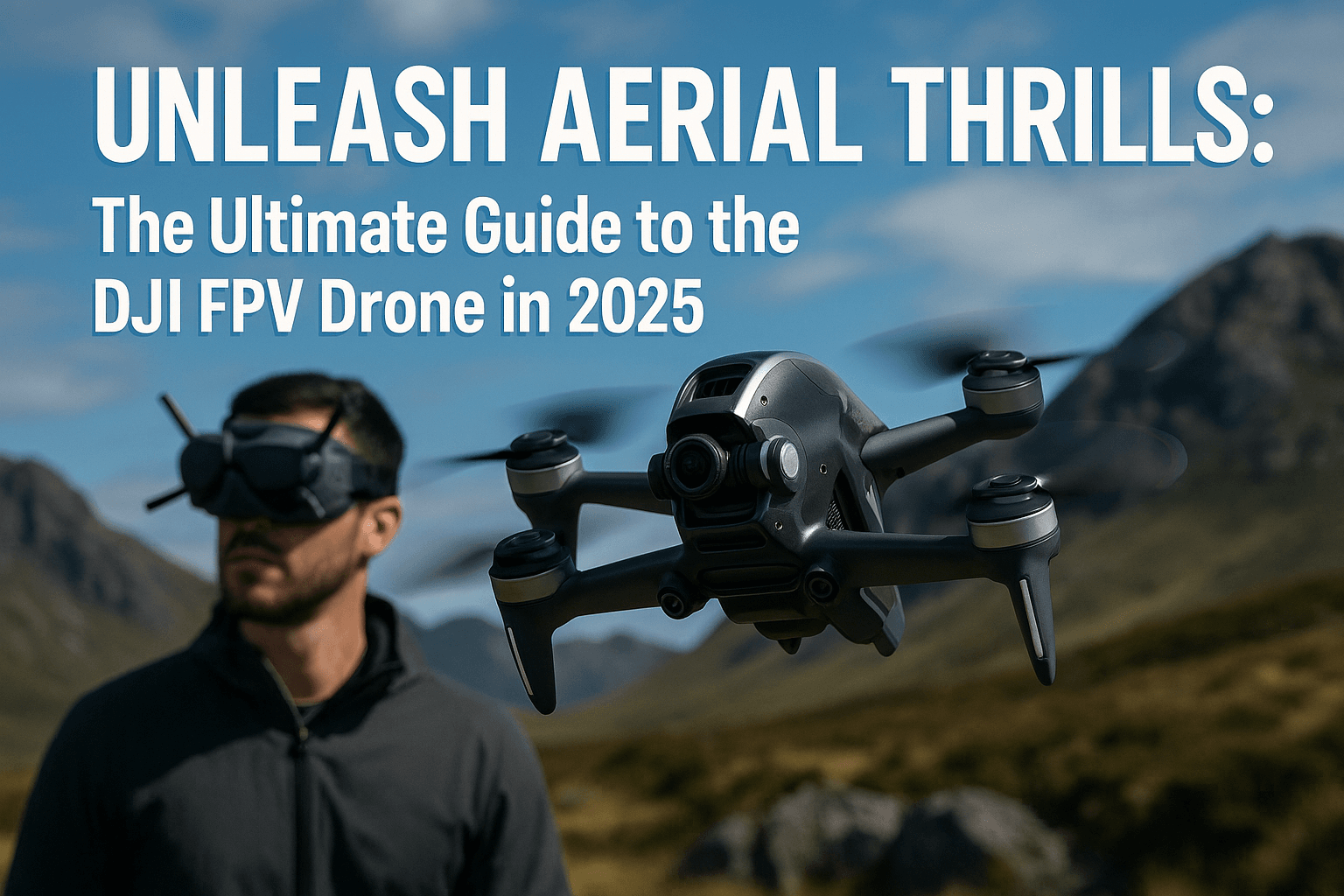

The world of drones has revolutionized aerial perspectives, from breathtaking cinematic shots to high-octane racing. Yet, a unique segment offers an unparalleled immersive experience: First-Person View (FPV) flying. Leading this charge in terms of accessibility and integration is the DJI FPV drone, a groundbreaking system that combines the thrill of FPV flight with DJI’s renowned reliability and user-friendly design. For those looking to dive headfirst into the exhilarating world of FPV in 2025, understanding what makes the DJI FPV drone stand out is crucial. Join me as we explore its features, capabilities, and why it remains a compelling choice for enthusiasts and professionals alike.
Key Takeaways
- The DJI FPV drone offers a unique hybrid experience, blending traditional DJI stability with the immersive thrill of FPV flying.
- It features multiple flight modes (Normal, Sport, Manual) catering to a wide range of skill levels, from beginners to seasoned pilots.
- The system includes advanced technology like O3 (OcuSync 3.0) transmission for low-latency, high-definition video, and robust safety features such as emergency brake and hover.
- While offering cinematic capabilities, its primary appeal lies in its immersive flight experience and agility, making it distinct from dedicated cinematic drones.
- Consider the comprehensive DJI FPV system, including the drone, FPV Goggles V2, and various controllers, for the complete, integrated experience.
What Makes the DJI FPV Drone a Game-Changer?
The DJI FPV drone arrived on the scene as a true innovator, bridging the gap between ready-to-fly (RTF) camera drones and the traditionally complex, DIY world of FPV racing and freestyle quads. Before its introduction, getting into FPV required significant technical know-how: building a drone from scratch, soldering components, flashing firmware, and meticulously configuring radio transmitters and goggles. This high barrier to entry often deterred many aspiring pilots.
DJI, known for its user-friendly and highly capable drones like the Mavic and Phantom series, stepped in with a solution. The DJI FPV drone is an all-in-one package, offering a complete system that includes the drone, the FPV Goggles V2, and a standard remote controller or the optional Motion Controller. This integration drastically simplifies the onboarding process for newcomers while still providing a taste of the raw, visceral experience FPV pilots crave.
“The DJI FPV drone successfully democratized FPV flying, bringing the immersive experience to a much broader audience without compromising on performance or safety.”
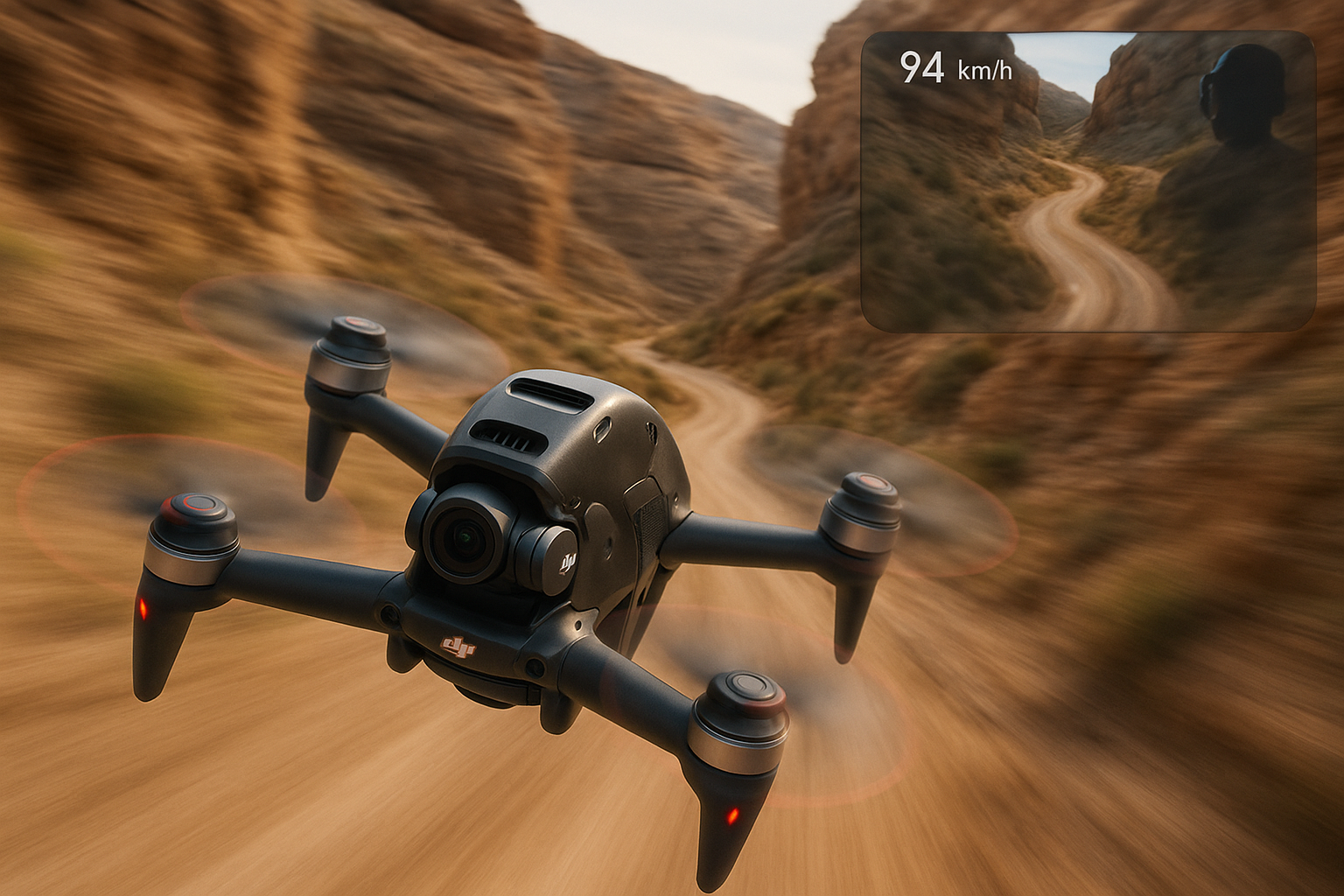
It’s a drone designed for speed, agility, and the pure joy of flight, delivering a truly immersive perspective that regular drones can’t match. When you put on the FPV Goggles V2, you’re not just watching a screen; you feel like you’re inside the cockpit, soaring through the sky. This is where the magic of the DJI FPV drone truly shines.
Understanding the DJI FPV Drone’s Core Technology
At the heart of the DJI FPV drone’s exceptional performance is a blend of cutting-edge technology and intelligent design. Let’s delve into some of the key components that power this immersive flying machine.
Immersive FPV Goggles V2
The FPV Goggles V2 are central to the experience. These goggles provide a crystal-clear, low-latency video feed directly from the drone’s camera, making you feel as if you’re riding shotgun. Key features include:
- High-Resolution Display: Sharp screens for detailed visual feedback.
- O3 (OcuSync 3.0) Transmission: DJI’s advanced transmission system ensures a stable, reliable, and incredibly low-latency video feed up to several kilometers. This is crucial for precise FPV flying and preventing disorientation.
- Dual-Band Frequencies: Automatically switches between 2.4 GHz and 5.8 GHz to maintain optimal signal quality.
Powerful Propulsion System and Aerodynamic Design
The DJI FPV drone boasts a powerful motor and propeller combination, allowing it to accelerate from 0 to 100 km/h (60 mph) in just two seconds and reach a top speed of 140 km/h (87 mph). Its sleek, aerodynamic design isn’t just for looks; it contributes to its speed and efficiency, making exhilarating maneuvers possible.
Advanced Camera and Gimbal System
While not primarily a cinematic drone in the same vein as the Mavic series, the DJI FPV drone still features a highly capable camera:
- 4K/60fps Video: Captures incredibly smooth and detailed footage.
- 150° Super-Wide FOV: Provides an expansive perspective, perfect for capturing the feeling of speed and immersion.
- RockSteady Stabilization: DJI’s electronic image stabilization technology ensures smooth, shake-free footage even during aggressive maneuvers.
For those interested in capturing stunning aerial photography and videography, exploring other options like the 10 Best Camera Drone for Aerial Photography and Videography might offer different capabilities. However, for a blend of immersive flight and decent video, the DJI FPV drone is hard to beat.
Flight Modes: From Beginner to Pro Pilot
One of the most impressive aspects of the DJI FPV drone is its versatility in catering to pilots of all skill levels. It achieves this through three distinct flight modes:
- Normal Mode (N Mode): 🧘♀️ This is the mode for beginners. It features GPS positioning, obstacle sensing (forward and downward), and full stability assistance, similar to flying a standard DJI camera drone. The drone is limited in speed and angles, making it easy to learn the basic controls without the fear of immediate crashes. It’s a fantastic stepping stone for those new to FPV.
- Sport Mode (S Mode): 🚀 Stepping up the game, Sport Mode disables some obstacle sensing but still provides stability assistance. The drone is faster and more agile, allowing for more dynamic movements and higher speeds, but without the full manual control. This mode is excellent for pilots who are comfortable with Normal mode and want to explore more adventurous flying.
- Manual Mode (M Mode): 🛩️ This is where the true FPV experience comes alive. Manual Mode disables all stability assistance and obstacle sensing, giving the pilot full, unadulterated control over the drone’s movements, including flips, rolls, and dives. It requires practice and precision but offers the most exhilarating and creative flight possibilities. DJI wisely includes a built-in simulator in the DJI Fly app to practice Manual Mode safely before taking to the skies.
Table: DJI FPV Drone Flight Mode Comparison
| Feature | Normal Mode (N Mode) | Sport Mode (S Mode) | Manual Mode (M Mode) |
|---|---|---|---|
| Target User | Beginners | Intermediate | Experienced / Pro FPV Pilots |
| Speed | Slow (up to 50 km/h) | Moderate (up to 97 km/h) | Fast (up to 140 km/h) |
| Stability | Full GPS & Visual | Assisted Self-Leveling | No Assistance (Acrobatic) |
| Obstacle Sensing | Forward & Downward | Limited (no obstacle avoidance) | None |
| Control Complexity | Easy, Like a Standard Drone | Moderate, More Agile | High, Full Manual Control |
| Emergency Features | Hover, Return-to-Home | Hover, Return-to-Home | Emergency Brake & Hover (via button) |
| Immersion Level | Low-Moderate | Moderate-High | Maximum |
This graduated approach makes the DJI FPV drone accessible while still offering the depth that seasoned FPV pilots demand. If you’re looking for a drone that grows with you, this is it. For more general drone comparisons, you might find guides like 10 Best Drones 2023 Reviews Guide helpful.
Safety Features: DJI’s Commitment to Secure Flying
Even with its focus on speed and agility, DJI has integrated several crucial safety features into the DJI FPV drone to protect both the aircraft and its operator.
- Emergency Brake and Hover: A dedicated button on the remote controller allows pilots to instantly stop the drone and make it hover in place, regardless of the flight mode. This is a lifesaver in unexpected situations.
- Forward & Downward Obstacle Sensing: In Normal Mode, the drone can detect obstacles and automatically slow down or stop to avoid collisions. While limited in other modes, it still provides an extra layer of protection for new pilots.
- ADS-B Receiver: This system receives signals from nearby manned aircraft, providing alerts to the pilot via the FPV Goggles, enhancing airspace awareness.
- Return-to-Home (RTH): Standard with most DJI drones, RTH automatically brings the drone back to its take-off point if the signal is lost or the battery runs low.
- GPS Positioning: Essential for stable hovering and precise navigation, particularly in Normal and Sport modes.
These safety mechanisms provide a significant advantage over many DIY FPV setups, making the DJI FPV drone a safer and more confident choice for many pilots in 2025.
The DJI FPV Drone vs. Traditional FPV & Camera Drones
It’s important to understand where the DJI FPV drone fits in the broader drone landscape. It occupies a unique niche, distinct from both standard camera drones and custom-built FPV quads.
Compared to Standard Camera Drones (e.g., DJI Mavic Series)
- Pros of DJI FPV:
- Immersion: The first-person perspective is unmatched for thrill and engagement.
- Speed & Agility: Far faster and more maneuverable, capable of dynamic, acrobatic flights.
- Flight Experience: Designed purely for the joy and skill of flying.
- Cons of DJI FPV:
- Camera Quality/Gimbal: While good, it lacks the advanced, multi-axis stabilized gimbals and sophisticated camera features (zoom, larger sensors) of dedicated aerial photography drones.
- Ease of Use for Beginners: While N mode helps, it’s still more challenging to master than a Mavic.
- Flight Time: Generally shorter flight times due to its power-hungry nature.
If your primary goal is professional-grade aerial photography or videography with maximum stability and advanced intelligent flight modes, a drone like those reviewed in 10 Best Aerial Photography Drones might be a better fit.
Compared to DIY FPV Drones
- Pros of DJI FPV:
- Ready-to-Fly: No assembly, soldering, or complex configuration required.
- Integrated System: Drone, goggles, and controller work seamlessly together out of the box.
- Durability & Repairability: DJI offers repair services and parts.
- Safety Features: Emergency brake, obstacle sensing, and RTH are often absent in DIY builds.
- User Experience: Refined software, intuitive controls.
- Cons of DJI FPV:
- Customization: Limited compared to DIY builds where every component can be chosen.
- Cost of Repairs: Specific DJI parts can be more expensive than generic FPV components.
- “Locked-in” Ecosystem: You’re largely tied to DJI’s proprietary system.
For those considering alternatives to DJI, perhaps due to budget or specific feature requirements, there are some great options on the market. You can explore 10 Best DJI Alternatives to see what other brands offer in 2025.
Capturing Content with the DJI FPV Drone
While its main draw is the immersive flight experience, the DJI FPV drone is certainly capable of capturing engaging content. The 4K/60fps camera with RockSteady stabilization produces smooth, dynamic footage that can be truly breathtaking.
The wide 150° field of view gives your videos an expansive, cinematic feel, perfect for swooping through landscapes, diving around obstacles, or simply showcasing the sheer speed of the drone. Many professional videographers even integrate FPV footage into larger productions to add a unique, dynamic element that traditional drones can’t achieve.
However, it’s worth noting that the FPV drone’s camera is fixed on a single-axis gimbal for tilt, unlike the 3-axis gimbals on most DJI camera drones. This means rolls and yaw movements will directly affect the horizon line in your footage, adding to the FPV feel but requiring more skill to maintain a level shot.
Tips for great FPV footage:
- Practice in Manual Mode: This allows for the most creative and fluid movements.
- Master the Controls: Smooth, controlled stick inputs lead to smoother video.
- Use ND Filters: Essential for cinematic motion blur in bright conditions.
- Post-Stabilization: While RockSteady is good, additional stabilization in editing software can further enhance your footage.
- Storytelling: Plan your flight paths to tell a story or highlight specific features of a location.
Essential Accessories for Your DJI FPV Drone in 2025
To truly maximize your experience with the DJI FPV drone, a few accessories are highly recommended.
- Extra Batteries: The intelligent flight battery for the DJI FPV drone typically provides around 20 minutes of flight time. Given the excitement of FPV, this time flies by quickly! Investing in at least 2-3 extra batteries is a must for extended sessions.
- Propeller Guards: Especially for beginners, propeller guards can save you from costly propeller replacements and protect the drone in minor collisions.
- Carrying Case: A dedicated carrying case protects your valuable gear – the drone, goggles, controller, and batteries – during transport. DJI offers one, and third-party options are also available.
- ND Filters: Neutral Density (ND) filters reduce the amount of light entering the camera, allowing you to use slower shutter speeds for a more cinematic motion blur, especially important for high-speed FPV footage.
- Motion Controller (Optional): This single-handed controller provides an incredibly intuitive “point-and-fly” experience, allowing you to control the drone with natural hand movements. It’s fantastic for immersive, easy flying, though it doesn’t offer the full manual control of the standard remote.
- DJI Care Refresh: Like an insurance plan, DJI Care Refresh covers accidental damage for a service fee, offering peace of mind, especially when learning to fly FPV.
Choosing the right accessories can significantly enhance your flying experience and protect your investment in your DJI FPV drone. For a comprehensive buying guide, check out resources like 12 Drone Buying Guide Tips in 2023.
The Future of FPV with DJI
As we look towards the rest of 2025 and beyond, the impact of the DJI FPV drone is clear. It has successfully made FPV flying accessible to the masses, lowering the barrier to entry while maintaining high performance standards. While speculation often surrounds new product releases, the current DJI FPV drone system remains a robust and highly capable platform.
DJI’s continued innovation in drone technology, including advancements in battery life, transmission systems, and camera capabilities, suggests an exciting future for FPV. Whether through updates to the existing system or entirely new FPV products, DJI is poised to continue shaping the landscape of immersive aerial experiences. The foundation laid by the DJI FPV drone is strong, encouraging more people to discover the exhilarating world of first-person drone flight.
Conclusion
The DJI FPV drone is more than just another drone; it’s a gateway to an exhilarating and immersive aerial experience. By combining DJI’s signature ease of use and reliability with the raw thrill of FPV, it has created a unique category that appeals to beginners and experienced pilots alike. Its versatile flight modes, robust safety features, and capable imaging system make it a compelling choice for anyone looking to truly feel like they’re flying in 2025.
Whether you’re yearning for adrenaline-pumping speed, cinematic dives, or simply a new perspective on the world, the DJI FPV drone delivers. It’s a testament to DJI’s ability to innovate and expand the possibilities of drone technology. So, if you’re ready to strap on some goggles and take to the skies, the DJI FPV drone offers an incredible journey.
Actionable Next Steps:
- Research Further: Watch flight reviews and tutorials on YouTube to see the DJI FPV drone in action.
- Consider Your Skill Level: Think about which flight mode you’d start with and how you plan to progress.
- Budget for Accessories: Don’t forget to factor in the cost of extra batteries and propeller guards.
- Practice on the Simulator: If you purchase the drone, utilize the built-in simulator before attempting Manual Mode in real life.
- Check Local Regulations: Always be aware of and adhere to drone regulations in your area before flying. You can find useful information on drone regulations in resources like 10 Educational Drone Regulation Videos.

