

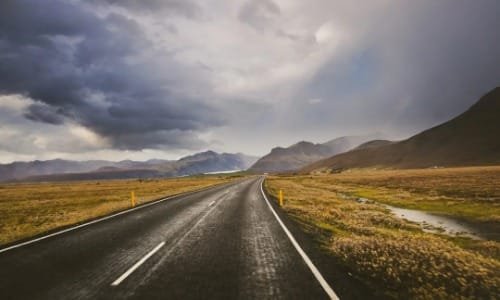

Life is often described as a journey. We travel along roads both familiar and unfamiliar, make choices that determine our direction, and gather memories like souvenirs collected from different destinations. Each stage of life resembles a passage through landscapes that can be beautiful, challenging, or even desolate. Like any traveler, we cannot always control the terrain, but we can choose how to respond to it, what to carry with us, and what to leave behind.

Roads That Shape Us
From childhood, we walk paths shaped by family and community. These early roads are often chosen for us, yet they provide the foundation for our growth. As we mature, the responsibility of choice becomes ours. Some roads are straight and clear, while others twist unpredictably. There are detours, unexpected turns, and crossroads where decisions feel weighty and permanent.
Every road we take leaves an imprint. A quiet village may remind us of peace, a bustling city may evoke ambition, and a winding mountain path may symbolize struggle and perseverance. Life is made up of these varied landscapes, each one offering lessons and memories.
The Choices Along the Way
Travelers often face the question: which path should I take? Similarly, in life we are constantly deciding between possibilities. Some choices are practical — what career to pursue, where to live. Others are deeply personal — whom to love, what to believe, how to live meaningfully.
What makes the metaphor of travel so powerful is the understanding that no path is ever truly wasted. Even a wrong turn offers experience and insight. Sometimes, detours lead to unexpected beauty we would never have encountered otherwise. Just as a missed train might allow us to witness a sunset we would have overlooked, life’s setbacks can hold hidden blessings.
Memories as Souvenirs
When we look back on our journey, we rarely remember the exact details of every mile traveled. Instead, we carry impressions — the laughter shared with friends, the silence of a dawn, the challenge of a climb. These memories become our souvenirs, shaping how we see ourselves and the world.
Memories also link us to others. Shared experiences create bonds that endure across time and distance. Even when people leave our lives, the recollections remain, like postcards from a journey long past. They remind us that relationships, like roads, may have an end, but their impact continues.
Farewells and Symbolism
Every traveler knows the bittersweet feeling of departure. Saying goodbye to a place or a companion is part of the rhythm of life. Some farewells are temporary, others final. In many cultures, this reality is acknowledged through symbolic acts. One poignant example is the scattering of ashes, a ritual that embodies both memory and release.
When families choose the scattering of ashes, they are not merely letting go — they are weaving the memory of a loved one into the fabric of nature. Sea scattering, in particular, carries deep symbolism. The ocean, vast and eternal, becomes a metaphor for continuity, reminding us that while one journey ends, it also merges into something greater.
These rituals echo the essence of travel itself: moving forward while honoring what has passed. They remind us that endings are not erasures but transformations, just as every road leads not to disappearance but to new horizons.
The Ocean as a Teacher
The sea, with its tides and currents, is one of life’s most enduring metaphors. To stand on a shore is to feel both the immensity of existence and the transience of our own lives. Sea scattering as a practice draws upon this symbolism, teaching us about surrender, humility, and connection. Just as waves return to the shore again and again, our experiences ripple outward, influencing others in ways we may never see.
Living as a Traveler
What does it mean to embrace life as a journey? It means accepting uncertainty while seeking meaning in each step. It means carrying light, so we are not burdened by regrets or possessions that weigh us down. It means recognizing that other travelers walk beside us, sometimes for a short distance, sometimes for a lifetime.
To live as a traveler also requires openness — the willingness to learn, to be surprised, to take in beauty where it appears. We may not always choose the roads ahead, but we can choose to notice the flowers by the roadside, the kindness of strangers, and the lessons hidden in challenges.
Conclusion
Life as a journey is more than a metaphor; it is a reminder of how to live. Roads, choices, and memories shape our path, just as landscapes shape a traveler’s story. In the end, our journey is defined not only by where we go but by how we travel — with awareness, gratitude, and courage. Like travelers collecting souvenirs, we gather experiences, carry them forward, and, when the time comes, release them back to the greater whole.
Life’s beauty lies not in permanence, but in the unfolding of each step along the way.

