


The skies of 2025 are buzzing with innovation, and among the most talked-about advancements in the drone world is the concept of the dji flip drone. Imagine a drone that combines DJI’s renowned stability and camera prowess with the thrilling agility of a racing drone, capable of performing gravity-defying flips and rolls with effortless grace.
This isn’t just about speed; it’s about unlocking new dimensions of aerial expression, from cinematic stunts to dynamic photography that pushes creative boundaries. For years, pilots have dreamed of a DJI drone that offers both intelligent flight and exhilarating acrobatics. This article delves into what a dji flip drone could mean for the future of aerial cinematography, recreational flying, and professional applications, exploring its potential features, impact, and the sheer joy it could bring to pilots worldwide.
Key Takeaways
- Defining the DJI Flip Drone: A conceptual DJI drone designed for both intelligent, stable flight and advanced acrobatic maneuvers like flips and rolls, combining the best of recreational and professional drone capabilities.
- Fusion of Agility and Stability: It represents a significant leap, merging DJI’s hallmark user-friendly flight systems and reliable GPS with the high-performance agility typically found in FPV or racing drones.
- Enhanced Creative Possibilities: The ability to perform flips and dynamic stunts opens new avenues for filmmakers, photographers, and content creators to capture unique and visually stunning footage.
- Technological Innovations: Such a drone would likely feature advanced flight control algorithms, robust motor systems, and potentially specialized gimbals or camera systems designed to maintain stability during aggressive maneuvers.
- Impact on the Drone Market: A dji flip drone would likely bridge the gap between different drone user bases, appealing to both casual enthusiasts and seasoned professionals looking for versatile, high-performance aerial tools.
The Evolution of Drone Acrobatics and the DJI Flip Drone Concept
The world of drones has come a long way from simple remote-controlled aircraft. Initially, drones were clunky, hard to control, and primarily used for military purposes. Fast forward to 2025, and consumer drones have revolutionized everything from package delivery to cinema. DJI has been a titan in this evolution, consistently pushing the boundaries of what’s possible with features like advanced obstacle avoidance, intelligent flight modes, and industry-leading camera systems.
However, one area where DJI’s mainstream drones have traditionally held back is aggressive aerobatics. While racing drones and FPV (First Person View) drones have long offered thrilling flips, rolls, and dives, they often require significant pilot skill and typically sacrifice stable camera platforms for raw agility. This is where the concept of a dji flip drone becomes incredibly exciting. It envisions a drone that doesn’t force a compromise, offering the precision and stability DJI is known for, while also granting the pilot the freedom to execute complex aerial maneuvers with relative ease.
Think back to the early days of drone flying – many beginners struggled just to keep their aircraft steady. Now, with sophisticated GPS and flight stabilization, flying has become accessible to millions. But for those who crave more, for those who look at an FPV drone zipping through gates and wonder if DJI could ever offer something similar but with their signature polish, the dji flip drone is the answer to that longing. It’s about empowering pilots to transcend basic flight and add a layer of dynamic artistry to their aerial ventures.
“The true innovation lies not just in enabling flips, but in making those flips accessible, repeatable, and integrated into a seamless, intelligent flight experience.”
This conceptual leap represents a convergence of two distinct drone philosophies: the measured, cinematic flight of a Mavic series and the adrenaline-fueled agility of an FPV racer. The technology required for such a drone would be immense, integrating high-speed motor responses with sophisticated sensor fusion and flight control algorithms that can transition smoothly between stable hovering and dynamic acrobatics. It’s a vision that excites hobbyists and professionals alike, promising a new era of aerial creativity.
Design and Engineering Challenges for a DJI Flip Drone
Creating a dji flip drone that meets DJI’s high standards would involve overcoming several significant design and engineering hurdles. It’s not simply a matter of adding a “flip button.” The entire system must be re-evaluated to accommodate the stresses and demands of acrobatic flight while maintaining the user experience and camera performance expected from DJI.
1. Motor and Propeller Systems: For rapid acceleration and deceleration needed for flips and rolls, the drone would require extremely responsive and powerful motors, potentially brushless motors with high kV ratings. The propellers would also need to be optimized for both efficient, stable flight and the quick thrust changes demanded by acrobatics. This might involve a more robust prop design or quick-release mechanisms for easy replacement after aggressive maneuvers.
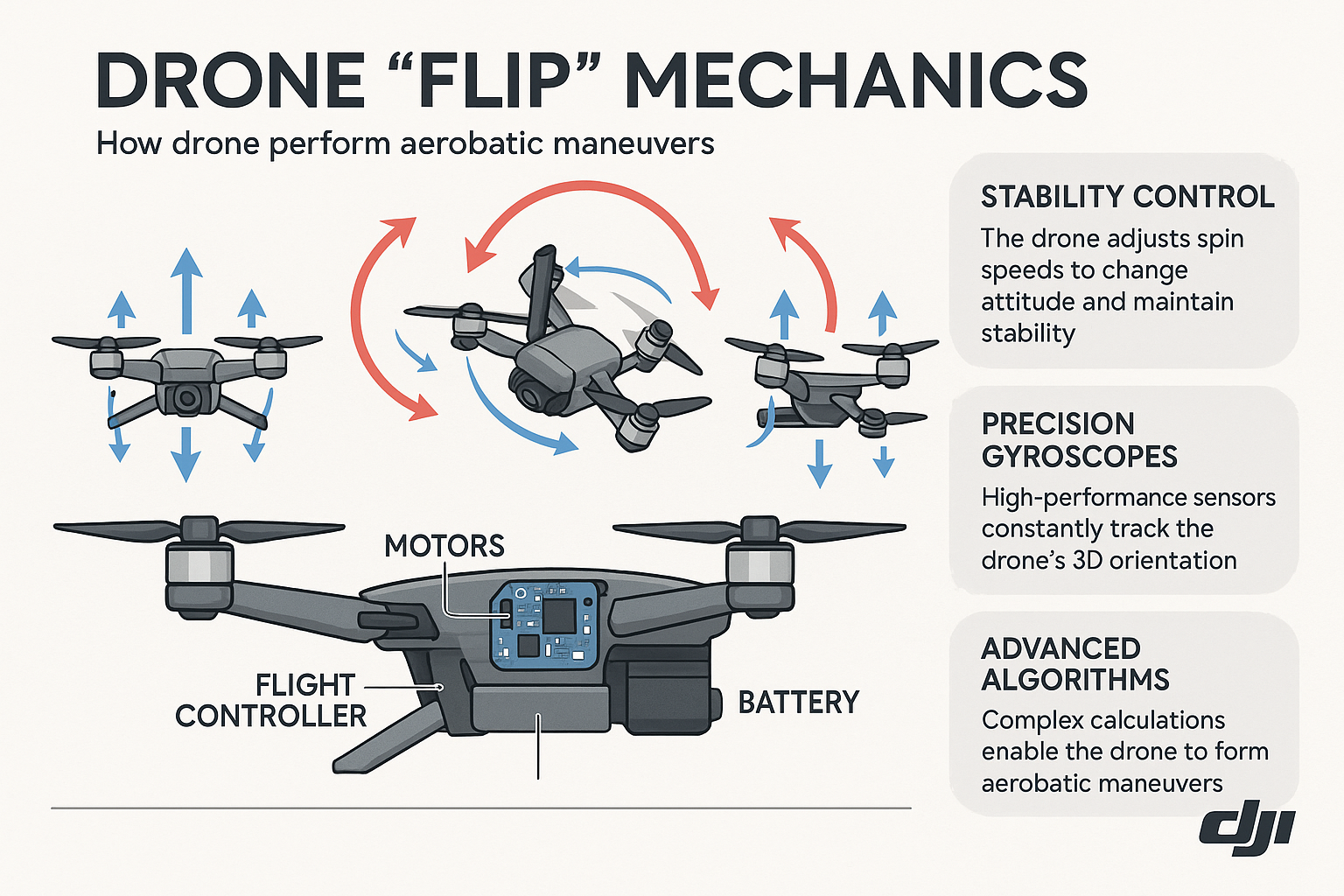
2. Flight Controller and Algorithms: The heart of any drone is its flight controller. For a dji flip drone, the algorithms would need to be exceptionally advanced. They would manage the rapid changes in orientation, compensate for external forces during flips, and ensure a smooth recovery back to stable flight. This means integrating highly precise gyroscopes and accelerometers, along with sophisticated predictive control systems. It’s a delicate balance to achieve both stability and extreme agility.
3. Gimbal and Camera Stability: One of DJI’s defining features is its incredible camera stabilization. A traditional gimbal, while excellent for smooth footage, might struggle during aggressive flips, potentially leading to jerky video or even damage. Solutions could include:
* Redesigned Gimbal: A more robust, perhaps two-axis gimbal, or a hybrid stabilization system combining mechanical and electronic image stabilization (EIS) to handle the extreme movements.
* FPV-style Camera: A fixed FPV camera for piloting during acrobatics, alongside a separate, perhaps retractable or internally mounted, stabilized camera for cinematic shots after the stunts.
* Advanced EIS: Leveraging powerful processors to achieve gimbal-like stability through purely electronic means, reducing mechanical complexity.
4. Battery Life and Power Management: Performing flips and high-G maneuvers consumes significantly more power than standard flight. A dji flip drone would need high-density batteries capable of delivering bursts of power without significant voltage sag, ensuring consistent performance throughout acrobatic sequences. This could mean shorter flight times during aggressive use, a trade-off many enthusiasts would likely accept.
5. Durability and Crash Resistance: Acrobatics inherently carry a higher risk of crashes. The frame of a dji flip drone would need to be exceptionally durable, perhaps using carbon fiber composites or reinforced plastics to withstand impacts. Modular design for easy replacement of arms or motors would also be a critical feature, catering to pilots who will inevitably push the limits.
6. User Interface and Flight Modes: The control interface would need to be intuitive. A “stunt mode” or “acro mode” with easily triggerable flips and rolls, perhaps even programmable sequences, would be essential. Integration with DJI’s Fly app would offer a seamless transition between cinematic and acrobatic flight. Exploring DJI’s intelligent drone flight modes could give us clues as to how this could be implemented.
Advanced Flight Modes and Creative Applications for the DJI Flip Drone
The true potential of a dji flip drone lies in the creative doors it could unlock. Beyond simply performing a cool trick, these acrobatic capabilities could be integrated into new flight modes and open up unprecedented possibilities for content creators.
Innovative Flight Modes:
- Acro-Cinematic Mode: This mode would allow pilots to seamlessly transition between stable, GPS-assisted flight and manual acrobatic maneuvers. Imagine flying smoothly towards a subject, initiating a graceful barrel roll around it, and then instantly reverting to stable flight for a perfect tracking shot – all within the same sequence.
- Pre-programmed Stunt Sequences: For those still honing their manual acrobatic skills, a dji flip drone could feature pre-programmed stunt sequences. A pilot could select a “loop,” “barrel roll,” or “dive bomb,” and the drone would execute it flawlessly, ensuring consistent and reproducible results for filmmaking.
- Dynamic Tracking with Acrobatics: Building on DJI’s ActiveTrack technology, imagine a mode where the drone not only tracks a subject but also performs dynamic maneuvers around it. For instance, tracking a skateboarder while performing a series of flips and turns, maintaining focus, and capturing a truly epic shot. This would elevate action sports videography to an entirely new level.
- Proximity Stunt Mode: With advanced sensor technology, a dji flip drone could offer a mode that allows for safe, close-quarters acrobatic stunts, perhaps around obstacles (like trees or arches) with a safety buffer. This could be revolutionary for capturing unique perspectives in challenging environments.
Creative Applications:
- Action Sports Cinematography: Capture the raw energy of extreme sports like never before. A snowboarder landing a jump could be filmed with a drone performing a matching mid-air flip. This creates a visceral connection between the drone’s movement and the athlete’s performance.
- Music Videos and Commercials: Directors could use the dji flip drone to add dynamic, eye-catching transitions and visual flair to their productions. Imagine a drone doing a quick flip as it swoops into a scene, instantly grabbing the viewer’s attention.
- Event Coverage: From concerts to festivals, a drone capable of agile maneuvers could capture unique crowd shots and stage perspectives, adding a layer of excitement to live event footage.
- Artistic Photography: Photographers could use the drone’s ability to quickly change perspective or altitude mid-flight to snap photos from unusual angles or capture fleeting moments that require rapid adjustments. This pushes the boundaries of traditional aerial photography. If you’re looking for general drone photography tips, check out these 19 drone photography tips for stunning aerial shots.
- Search and Rescue/Inspection (with a twist): While flips aren’t inherently useful here, the underlying agility and robust flight control developed for a dji flip drone could translate to more resilient and maneuverable inspection drones, capable of navigating complex industrial structures or tight spaces with greater ease, especially in windy conditions.
The possibilities are truly endless. The dji flip drone wouldn’t just be another gadget; it would be a creative tool empowering a new generation of aerial storytellers.
The Pilot Experience: Learning to Fly a DJI Flip Drone
For many, the idea of a dji flip drone brings both excitement and a touch of apprehension. DJI has always prioritized ease of use, making drones accessible to beginners. How would a drone capable of acrobatic maneuvers fit into this philosophy, especially for those new to advanced flying?
Accessibility for Beginners:
DJI’s approach to a dji flip drone would likely incorporate intelligent safeguards and progressive learning paths:
- Assisted Stunt Mode: This could be a “beginner-friendly” mode where the drone executes perfectly timed and controlled flips with a single button press, ensuring safety and consistency. The flight controller would manage all the complex calculations.
- Gradual Skill Progression: Similar to how DJI introduced different flight modes for speed and responsiveness, a dji flip drone could have levels of acrobatic control. Starting with basic flips, then moving to more complex rolls and dives as the pilot gains confidence.
- Simulation and Training: DJI could integrate a robust flight simulator within its app, allowing pilots to practice acrobatic maneuvers virtually without risking their physical drone. This would be crucial for mastering the muscle memory and timing required.
- Telemetry and Feedback: Real-time data on flight parameters during stunts (G-forces, angular velocity) could help pilots understand their actions and improve.
The Thrill for Experienced Pilots:
For seasoned drone pilots, the dji flip drone would offer a thrilling new challenge and an unparalleled level of control:
- Full Acro Mode: This mode would turn off all stabilization assists, giving the pilot direct control over the drone’s orientation. This is where true mastery comes into play, allowing for intricate, custom-designed stunt sequences.
- Customizable Flight Profiles: Pilots could fine-tune settings like stick sensitivity, rates, and expo to match their flying style, much like in FPV racing drones.
- FPV Integration: While a direct FPV racing experience might still be distinct, the ability to seamlessly integrate high-quality FPV goggles for precise acrobatic control would be a game-changer. Imagine seeing the world from the drone’s perspective as it performs a rapid corkscrew.
- Community and Competition: The emergence of a dji flip drone could foster new communities and even informal competitions for acrobatic drone flying, pushing the limits of what’s possible.
Anecdotally, I recall my first attempt at a “manual flip” with a small toy drone. It resulted in immediate chaos and a broken propeller. A DJI system that could guide a pilot through that process, providing the thrill without the instant destruction, would be a monumental achievement. It’s about bridging the gap between raw, unforgiving FPV flying and the safe, intelligent world of DJI. Learning about drones for beginners could provide insights into how DJI makes advanced features approachable.
Regulatory Considerations for the DJI Flip Drone
As drones become more sophisticated, so do the regulations governing their use. A dji flip drone, with its enhanced agility and capability for dynamic maneuvers, would bring specific considerations for pilots regarding airspace and safety in 2025.
1. Line of Sight (VLOS): Most drone regulations worldwide mandate Visual Line of Sight (VLOS). Performing advanced flips and maneuvers, especially at higher speeds or altitudes, can make maintaining VLOS challenging. Pilots would need to be extra diligent in ensuring they can always see and react to their drone, especially when performing stunts.
2. Airspace Restrictions: Acrobatic flights typically occur in uncontrolled airspace, away from airports and restricted zones. However, the dynamic nature of flips means the drone might cover more ground quickly or reach different altitudes unexpectedly. Pilots must be acutely aware of local airspace maps and restrictions.
3. Safety Distances: Maintaining safe distances from people, property, and obstacles is paramount. During flips, a drone’s trajectory can be less predictable than in standard flight. This necessitates flying in open areas with plenty of clear space to prevent accidents.
4. Remote Identification (Remote ID): In regions like the USA, Remote ID regulations are becoming standard for drones over a certain weight. A dji flip drone would almost certainly fall under these requirements, meaning it would broadcast its location and identification information. Pilots need to ensure their drone is compliant before flying.
5. Training and Certification: While casual acrobatic flying might not require specific certifications, commercial use of a dji flip drone for advanced cinematography could necessitate pilot certifications (e.g., Part 107 in the USA) and potentially specific waivers for operations that deviate from standard rules. The advanced capabilities might also encourage (or eventually require) dedicated training modules for safe acrobatic flight.
6. Environmental Impact: While not a direct regulation, pilots should be mindful of noise generated by high-power motors during aggressive maneuvers, especially in residential or sensitive natural areas.
It’s crucial for any pilot considering a dji flip drone to stay informed about the latest drone regulations in their specific operating region. Resources like local aviation authority websites and reputable drone forums are invaluable. Understanding and adhering to these rules ensures not only personal safety but also the continued positive public perception of drone technology. More general information on drone regulations can be found by researching educational drone regulation videos.
The Future Landscape: DJI Flip Drone’s Impact on the Market
The introduction of a dji flip drone could send ripples through the entire drone market in 2025, reshaping consumer expectations and influencing competitors.
Market Disruption and Segmentation:
- Bridging the Gap: A dji flip drone would effectively bridge the current divide between easy-to-fly camera drones (like the Mavic series) and complex, high-skill FPV/racing drones. This could attract new users who want both stable camera platforms and the thrill of acrobatics, without having to buy two separate drones.
- New Niche Creation: It could carve out a new niche for “Acro-Cinematic Drones,” defining a category that emphasizes both professional imaging and dynamic flight capabilities.
- Competitive Pressure: Other drone manufacturers would likely be compelled to respond. If DJI successfully integrates these features, competitors might rush to develop similar offerings, leading to a wave of innovation across the industry. This is reminiscent of how new DJI products often push the entire market forward. For those interested in alternatives, exploring DJI alternatives shows the breadth of the market.
Influence on Drone Technology:
- Standardization of Advanced Flight Modes: What starts as a premium feature in a dji flip drone could trickle down into other models, making basic acrobatic maneuvers more accessible in mainstream consumer drones.
- Robustness and Durability: The engineering required for a flip drone to withstand dynamic forces and potential impacts could lead to more durable designs across all drone categories.
- Battery and Motor Efficiency: Innovations in power management and motor technology developed for high-performance flips could benefit all drones, leading to longer flight times and more efficient operation.
Impact on Drone Content Creation:
- New Visual Language: Content creators would gain a powerful tool for crafting entirely new visual narratives, incorporating dynamic movement that was previously impossible or prohibitively difficult.
- Increased Engagement: Videos featuring complex drone stunts are highly engaging. A dji flip drone would allow more creators to produce such captivating content, potentially boosting viewership and creative output.
- Professional Tool for Niche Industries: Beyond entertainment, industries like surveying, inspection, and real estate could benefit from drones that are both agile and capable of precise, stable imagery, allowing for more dynamic and comprehensive data capture in challenging environments.
Consider the narrative of an aspiring filmmaker, struggling to get a dynamic shot of a car chase. With a traditional DJI drone, they get beautiful, stable footage. With an FPV drone, they get exhilarating but often shaky footage that requires significant post-production. The dji flip drone offers a “best of both worlds,” allowing for a seamless blend of cinematic quality and raw, adrenaline-pumping aerial action. This could truly democratize high-level aerial content creation.
User Testimonials and Community Excitement for the DJI Flip Drone
The mere mention of a dji flip drone concept ignites a fervent discussion among drone enthusiasts and professionals alike. The community sentiment is overwhelmingly positive, fueled by the prospect of combining DJI’s legendary reliability with exhilarating acrobatic capabilities.
Here’s a glimpse into the anticipated excitement:
“I’ve been flying DJI drones for years, primarily for landscape photography,” shares Sarah, a hobbyist photographer from Colorado. “My Mavic Air 2 is amazing, but sometimes I wish I could get those dramatic dives and rolls I see in FPV videos. If DJI could make a drone that does both, that’s my dream machine for 2025!” She often consults reviews of the best DJI drones for her next purchase.
Mark, a professional videographer specializing in extreme sports, echoes the sentiment: “Right now, I juggle between my Inspire for cinematic shots and a custom FPV rig for action. The workflow is a headache. A dji flip drone that offers robust, repeatable flips with a stable camera? That’s not just a convenience; that’s a game-changer for my entire production process. Imagine the shots we could get at ski resorts or mountain biking trails!”
Even experienced FPV pilots express interest. “While I love the raw, analogue feel of my custom FPV drone, a DJI product with ‘acro’ capabilities would definitely have a place,” says Jake, a seasoned FPV racer. “The reliability, the GPS return-to-home, and the integrated camera features would be awesome for practicing new tricks in a safer environment, or even just getting buttery smooth b-roll after some aggressive flying.”
The anticipation isn’t just about the ‘flip’ itself, but what it represents: a DJI drone that truly enables unbridled creative freedom without sacrificing the user-friendly experience the brand is known for. The community envisions new types of drone challenges, collaborative projects, and a surge in innovative aerial content. The shared feeling is that a dji flip drone wouldn’t just be a new product; it would be an evolution, pushing the boundaries of what consumers expect from their aerial platforms and cementing DJI’s position as an innovation leader for years to come.
Conclusion
The concept of a dji flip drone in 2025 represents an exciting convergence of stability, intelligence, and exhilarating acrobatic capability. It promises to bridge the gap between cinematic storytelling and dynamic aerial performance, offering unprecedented creative freedom to pilots of all skill levels. From the intricate engineering challenges in motor control and gimbal design to the revolutionary impact on content creation and the evolving regulatory landscape, a drone capable of such versatility is poised to redefine aerial imaging and recreational flight.
The enthusiasm within the drone community is palpable, driven by the desire for a single platform that can deliver both the reliable, high-quality footage DJI is known for and the thrilling, agile maneuvers typically reserved for specialized FPV drones. Should DJI bring such a product to market, it would not only expand their own ecosystem but also push the entire drone industry forward, inspiring new innovations and fostering a new generation of aerial artists and enthusiasts. The future of flight looks incredibly dynamic, and the dji flip drone stands as a beacon of what’s possible when technology meets imagination.
Actionable Next Steps:
- Stay Informed: Keep an eye on DJI’s official announcements and patent filings for any hints regarding advanced flight capabilities or new drone models in 2025 and beyond.
- Practice Fundamental Skills: If you’re new to drones, focus on mastering basic flight maneuvers and camera operation with existing DJI models. This will provide a strong foundation for any future acrobatic drone. Consider starting with beginner-friendly drones to build your confidence.
- Explore FPV Simulators: To prepare for the agile nature of a dji flip drone, consider trying FPV drone simulators. Many are available on PC and even mobile, offering a safe way to practice advanced control.
- Engage with the Community: Join online drone forums and social media groups to discuss the dji flip drone concept, share ideas, and learn from other enthusiasts.
- Review Regulations: Familiarize yourself with local drone regulations, especially those pertaining to advanced flight and safety distances, as these will be crucial for safely operating any highly agile drone.
DJI Flip Drone Potential Assessment Tool
Evaluate your readiness and the creative potential for a hypothetical DJI Flip Drone.

